Top Vet Dermatologist Reveals: The Real Reason Apoquel Stops Working After 3 Weeks (And What Works Instead)
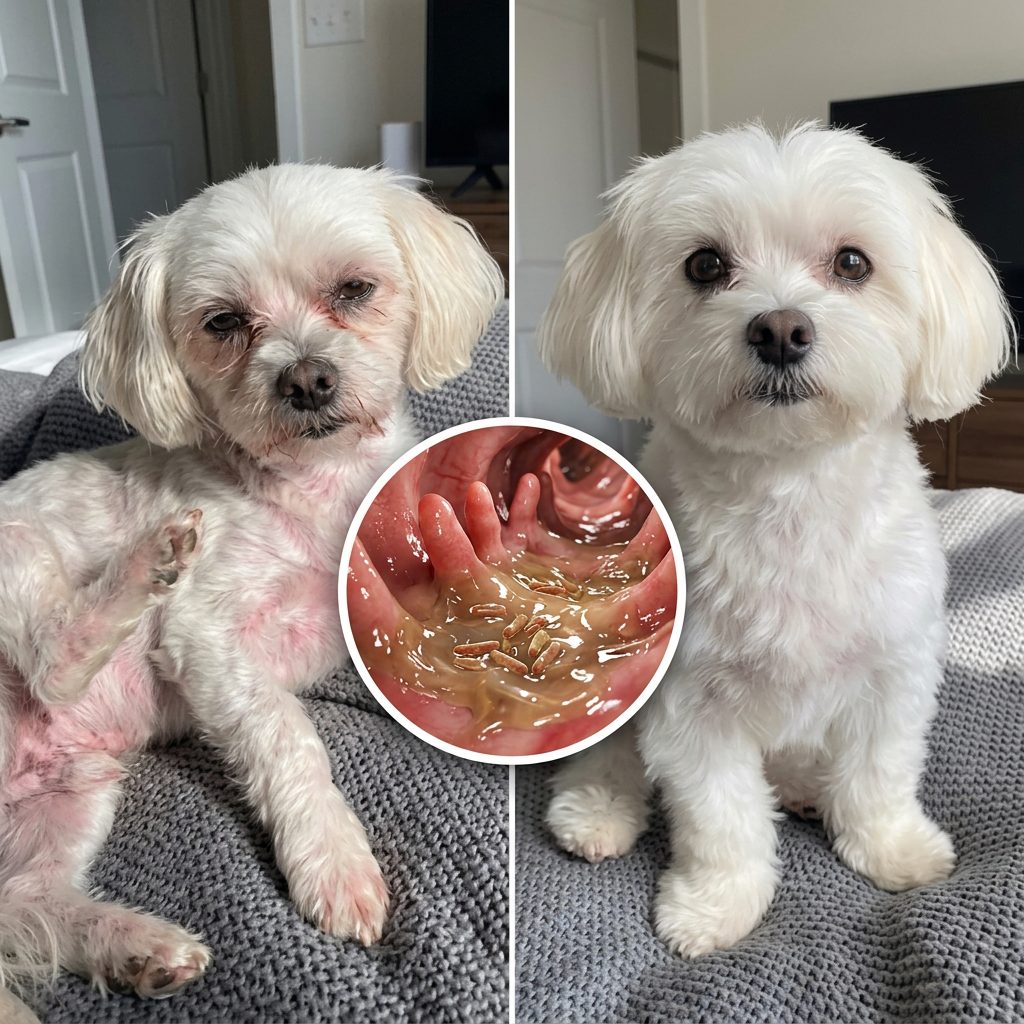
If you’ve watched Apoquel work like magic for about three weeks, then watched the itching come roaring back twice as strong, this is for you.
I’ve been a veterinary dermatologist for 19 years, and I’m going to tell you exactly why that happens. It’s not that the dose is too low. It’s not that your dog needs “something stronger.” It’s that Apoquel was never fixing the real problem in the first place.
My name is Dr. Adrian Russo, and I’m breaking ranks with my own profession to explain this, and why they’ll never tell you the truth.
Because there are three things happening right now.
One. Your dog’s body is screaming that something is wrong.
Two. You keep being told it’s “just allergies, manage it forever,” so you refill the script and hope.
Three. There’s a billion-dollar industry that profits every single month your dog stays itchy.
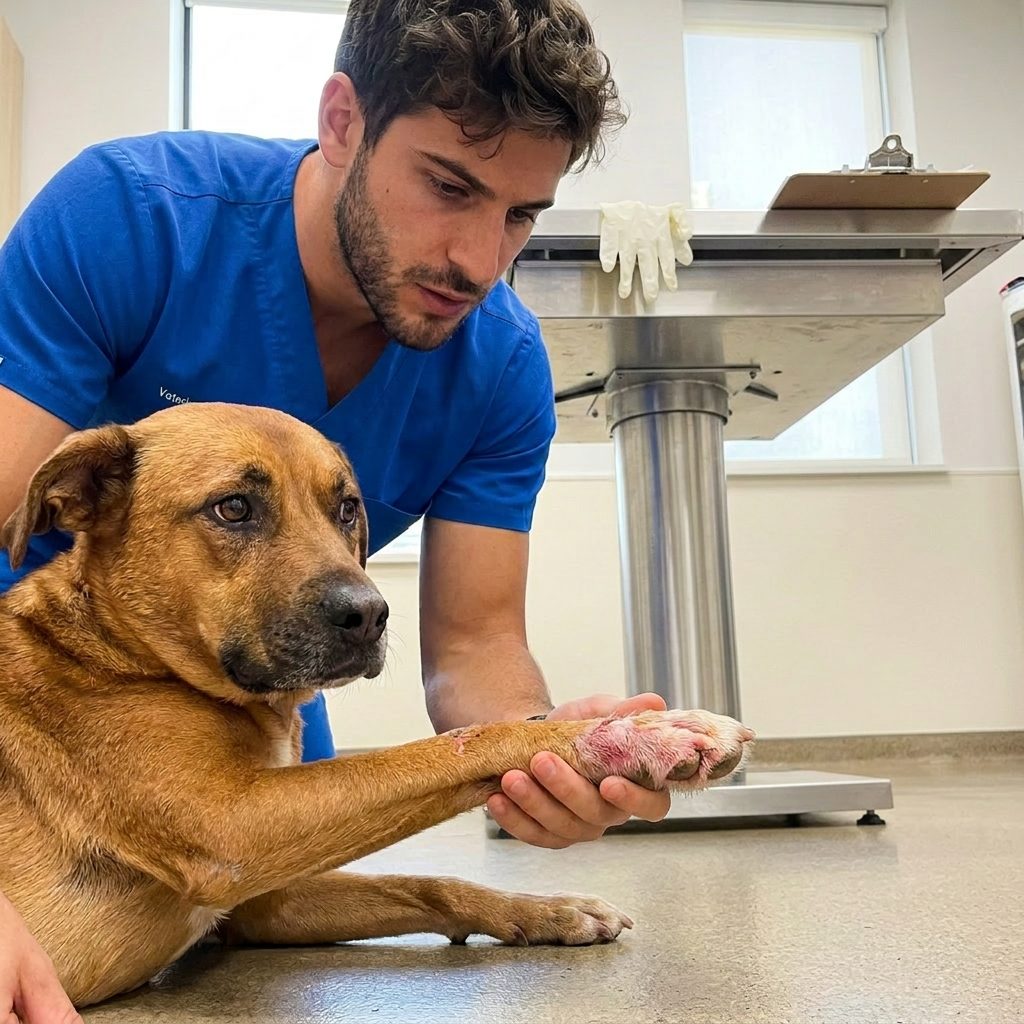
The Dog Who Changed How I Practice
Let me tell you about a dog named Bailey. Because once you hear what happened to him, you’ll see how backwards this whole thing really is.
Bailey was a scruffy little white rescue. His owner, Susan, had done everything right, for two straight years. His paws were chewed raw and pink. He woke the whole house at 2am with that lick, lick, lick sound. His ears were dark and gunky. And there was that warm, corn-chip, yeasty smell no amount of bathing touched.
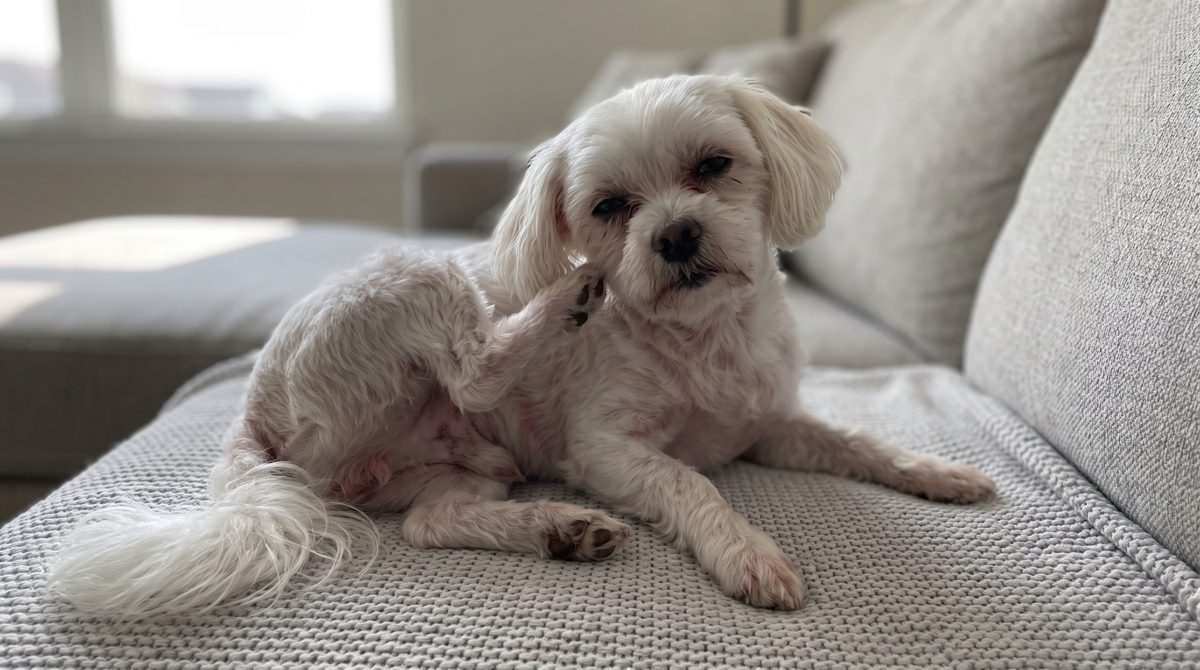
Susan had stopped letting him on the couch. Stopped having people over. She’d sit on the kitchen floor with him at night, near tears, watching him tear at his own skin, feeling like a complete failure.
And here’s what makes me sick. She’d already spent thousands. Her regular vet. A second vet. An allergy panel that came back flagging fifteen different things. Bloodwork. Skin scrapes. And you know what every one of us told her?
“It’s environmental allergies.” “It’s probably the food, try this prescription diet.” “Let’s start him on Apoquel.” “Some dogs just itch. You’ll manage it.”
Manage it. This dog was bleeding from his own paws and we told her to manage it.
So she did. Apoquel worked for about three weeks. Then it quit, and the itch came back twice as strong. Cytopoint bought a little more time, then the same thing. She changed his food, in her words, “a hundred times.” Nothing held more than a few weeks.
I watched this woman do everything we told her, spend a small fortune, and watch her dog get worse. And for a long time, I didn’t understand why.
The Discovery That Stopped Me Cold
Until a gut-microbiome researcher stopped me at a veterinary conference and taught me more about itchy skin in thirty minutes than I’d learned in nineteen years.
I was complaining about my most stubborn cases, the dogs that never got better no matter what I prescribed. She gave me the kind of smile that knows something you don’t, and she drew a diagram.
“Your whole model treats the itch as a skin problem,” she said. “So you calm the skin, block the signal, change the diet. That’s like mopping the floor while the tap is still running. You’ll never get ahead of it, because the problem isn’t the floor. It’s the tap.”
Then she said the thing that stopped me: “The itch isn’t starting in the skin. It’s starting in the gut. And there’s a reason none of your treatments reach it.”
The Real Root Cause of Your Dog’s Itch
Here’s what’s actually going on. Inside the gut, bad bacteria don’t just float around waiting to be killed. They build a shield over themselves. A sticky, invisible film called a biofilm. Think of it like plaque, but in the gut. And under that shield, the bad bacteria are safe.
Antibiotics slide off it. Prescription diets don’t touch it. And here’s the cruel part: the probiotics you’ve been paying for can’t get through it either. They pass right by.
So the bad bacteria sit there, protected, pumping inflammation into the bloodstream day after day. And it comes out where you can see it. The skin. The paws. The ears. That smell. Your dog scratches, you treat the skin, it calms for a week, then it all comes back, because the real source, the biofilm in the gut, was never touched.
The One Scoop Hiding in Plain Sight
But here’s what she showed me next, and it’s the part that made me angry. There’s a natural enzyme called bromelain, from pineapple. It does the one thing nothing else does: it breaks the biofilm open. It dissolves the shield.
And once that shield is broken, the good bacteria can finally get in. That’s where the right mushrooms come in, turkey tail, reishi, lion’s mane. They feed the good bacteria and help the gut lining heal. But only in that order. Break the biofilm first. Then rebuild.
Break, then rebuild. Root cause, right order.
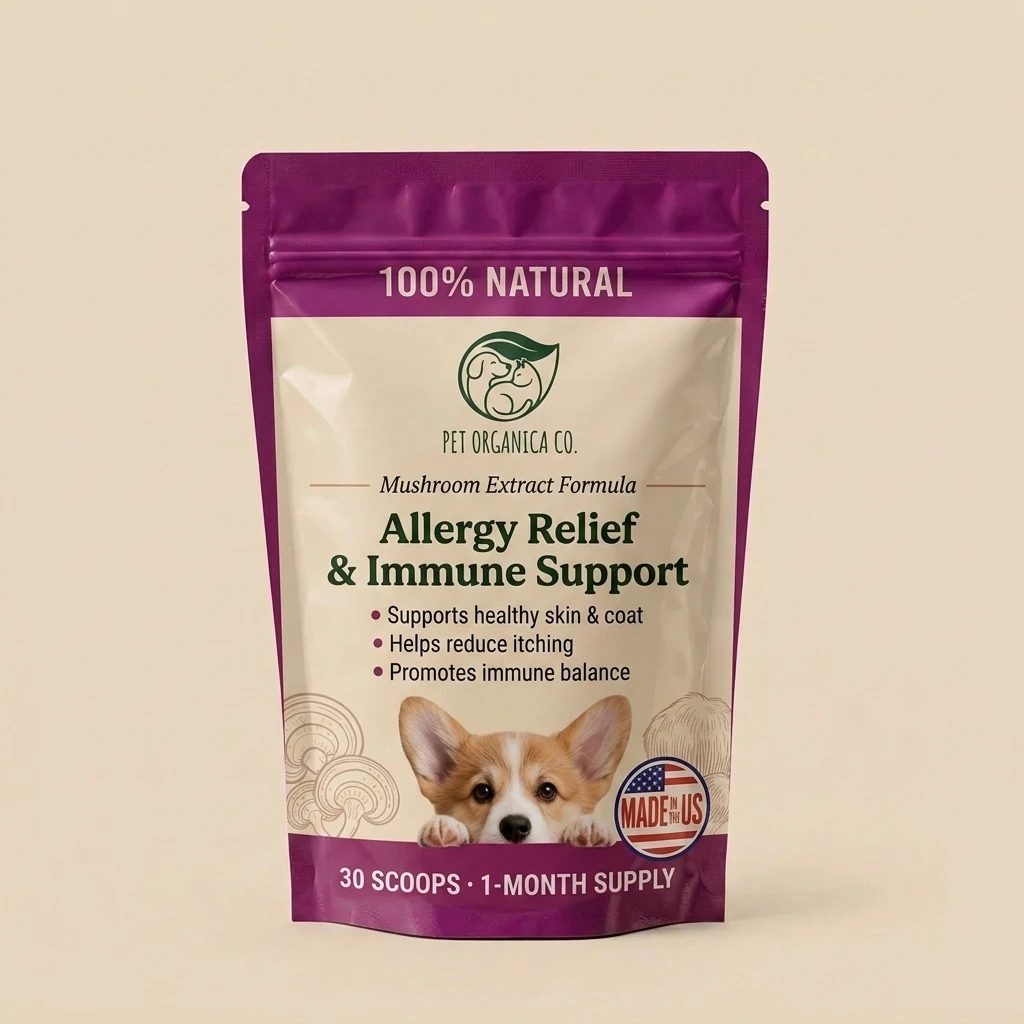
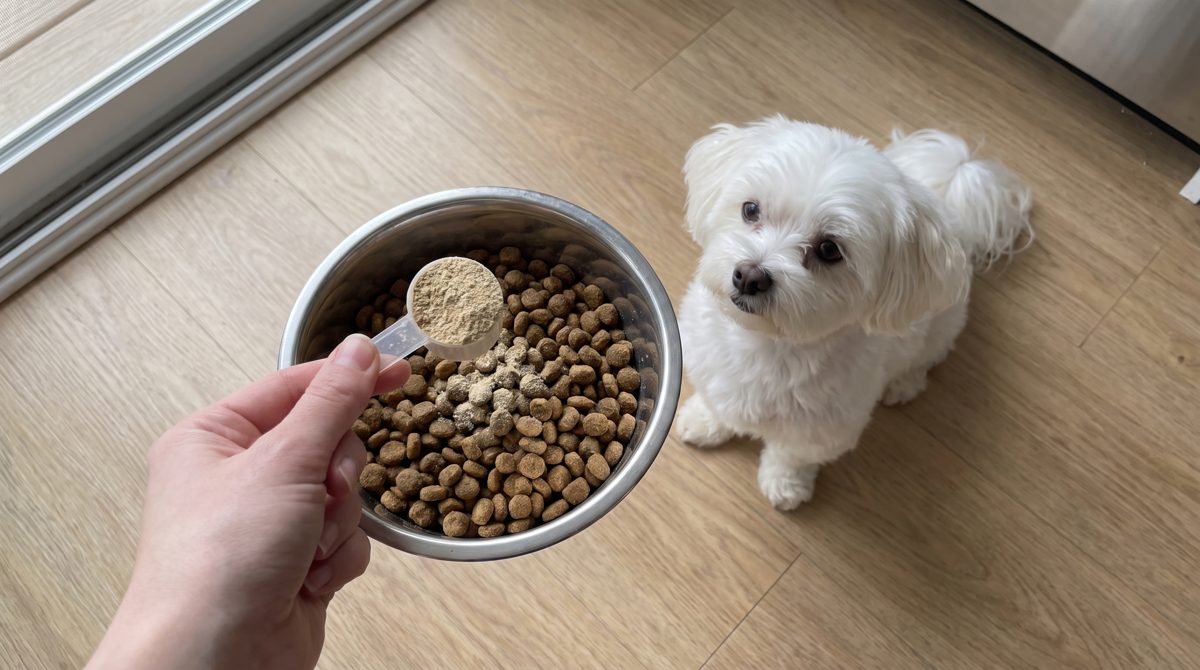
So I went looking for a product built around exactly this, at a real dose, in the right order. Until I found Pet Organica’s Allergy Relief & Immune Support. A mushroom-extract formula built to go after the gut, not just the skin. One scoop a day, on the food.
This Is Pissing Off an Entire Industry
Here’s what makes my blood boil. The research on bromelain and biofilm has been sitting there for years. Nobody’s connecting it to your itchy dog in the exam room. Why? Because there’s no money in it.
You can’t patent an enzyme from a pineapple and a few mushrooms. There’s no billion-dollar drug in it. The money is in the monthly Apoquel refill. In the recheck visits. In keeping your dog itchy but “managed,” forever. A dog that’s actually better doesn’t come back every month. And a whole industry is built on your dog coming back every month.
Every prescription I wrote for nineteen years worked on the skin. On the smoke. Not one ever touched the fire in the gut.
What Happened When I Tried It
So I tried it on the cases I’d already failed, starting with my own dog.
- Wk 1 Nothing dramatic on the outside yet, but the gut was going to work.
- Wk 2 The 2am licking started to quiet. First full night’s sleep in months.
- Wk 4 The raw spots on the paws were closing. Coat filling back in.
- Wk 6 That yeasty smell, gone. The dog I remembered was back.
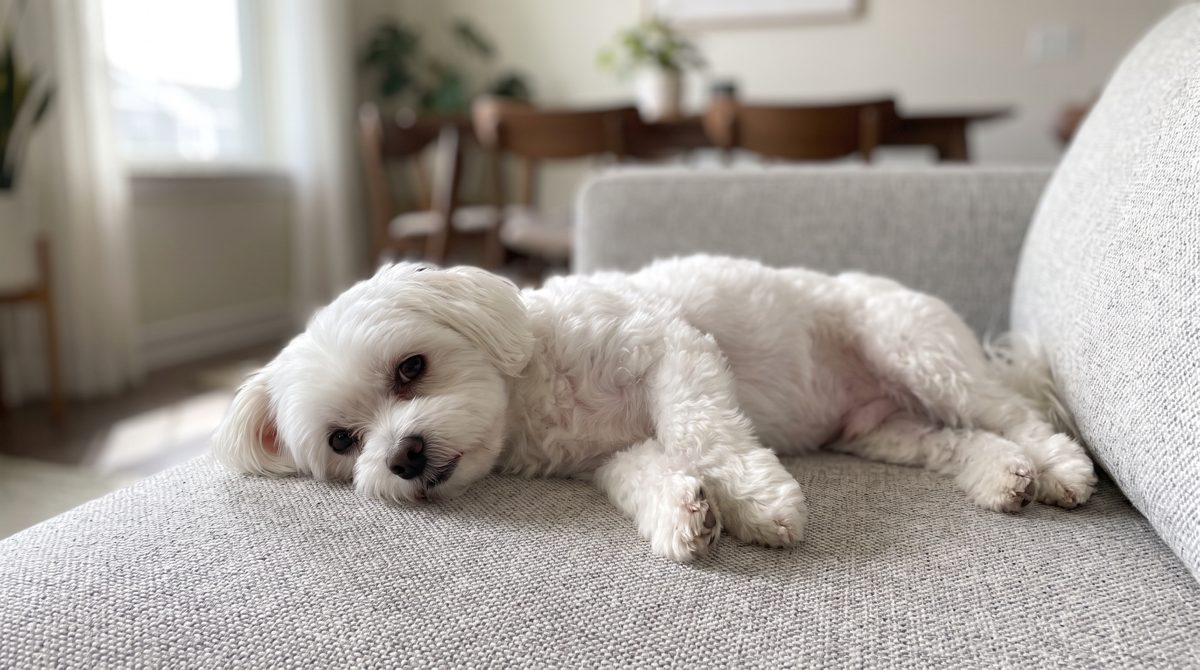
Then I called the owners I’d sent home with nothing but a prescription. Starting with Susan. I told her the truth: “I was chasing the itch on the skin when the cause was in his gut the whole time. I didn’t know the difference. I do now.”
“He can finally sleep on the couch again. No more tears from me and sad faces from him.”
“Two years of allergy tests, Apoquel and diet changes and nothing changed. A few weeks of this and he finally stopped chewing his paws.”
“One word. Heaven.”
Why You Can’t Wait on This
The longer that biofilm has been building, the more entrenched it gets, and the longer it takes to break down and rebuild. Early cases turn faster. So if your dog has been itching for over a year, please don’t wait longer.
Because if you’ve got a dog scratching, licking, chewing their paws raw, with that smell and those gunky ears, and nothing has worked, it’s not the season. It’s not the yard. It’s not one of the fifteen things on the panel. It’s the biofilm in the gut nobody ever addressed.
Try It Today
Buy 2, Get 1 Free · free Ultimate Guide on Allergies & Itching · free priority shipping
P.S. I’ve stopped reaching for Apoquel as the first move for chronic itch in my practice. I go after the gut biofilm first. My colleagues think I’ve lost it. But my patients’ paws are healing instead of getting worse.
P.P.S. Every round of Apoquel just mutes the itch signal. The second it wears off, the signal comes right back, because the biofilm in the gut is still there sending it. You’re paying to hit snooze. Break the biofilm and there’s no signal left to mute.